The Philosophy of Deception
In the world of security, there is a fundamental distinction between protection and concealment. A 1,000-pound steel safe represents protection; it is designed to resist a physical attack that is already underway. However, concealment is a proactive, strategic maneuver. It is the art of ensuring the attack never begins because the target is never identified in the first place.
This philosophy, often referred to as “Low Profile” or “Low-Vis” in intelligence circles, suggests that the most secure location isn’t necessarily the strongest one, but the most overlooked one. For centuries, master craftsmen and intelligence officers have used this principle to turn ordinary objects and furniture into sophisticated security tools. By exploiting the “blind spots” of human perception, they created a layer of security that traditional locks alone could never provide.
The Golden Age of Mechanical Furniture
Long before the advent of electronic sensors, the world’s elite relied on “Mechanical Furniture.” In the late 18th century, David Roentgen and his father Abraham became the most celebrated cabinetmakers in Europe by perfecting the hidden compartment. Their clients included Catherine the Great, King Louis XVI, and Marie Antoinette.
The Roentgen desks were marvels of pre-industrial engineering. By pressing a specific sequence of “dead-man” buttons or turning a hidden key disguised as a decorative flourish, entire sections of the desk would slide open via complex internal weights, pulleys, and springs. These were not just for show; they were the primary defense for sensitive diplomatic ciphers and personal fortunes against household theft and political spies. This era established a critical precedent: high-end aesthetics and high-level security are not mutually exclusive. A beautiful object can, in fact, be a formidable fortress.
The OSS and the Birth of Modern Concealment
The true shift from “luxury” to “tactical” concealment occurred during World War II. The Office of Strategic Services (OSS), the predecessor to the modern CIA, realized that agents operating behind enemy lines in occupied Europe faced a unique challenge. They needed to store gear, but they couldn’t carry heavy lockboxes or install obvious safes. They needed their environment to protect them.
The OSS “Camouflage” branch, under the direction of experts like Charles Parkin, specialized in what they officially termed “Concealment Devices” (CDs). Their job was to take everyday, mundane items and turn them into tactical containers. While they are famously remembered for hollowed-out coins and shaving cream cans, their work with domestic furniture was equally vital for “Dead Drops” and long-term gear caches.
According to the OSS Descriptive Catalog of Special Devices (1944), safehouses across Europe were outfitted with modified furniture. A dining table might have a hollowed-out leg for a radio transmitter; a bookshelf’s crown molding might slide away to reveal a pistol or a microfilm camera. The goal was to exploit the “contextual immunity” of the home. We don’t look at a table leg and think “hollow container,” we see a functional object. This is the essence of visual deception: if an object is common enough, it becomes invisible.
The Psychology of the Modern Burglar
To understand why this historical approach is so relevant for the modern homeowner, we must look at the psychology of the criminal. Most residential burglaries are “smash-and-grab” operations, typically lasting less than ten minutes. The intruder is working under extreme stress and a ticking clock.
A burglar’s first instinct is to head for the “Expected Locations”: the master bedroom closet, the nightstand, or the home office. When they see a traditional floor safe, they see a “treasure chest.” Even if they cannot open it, they may cause immense damage trying to pry it out or move it, or worse, they may wait for the homeowner to return to force it open.
By contrast, the “concealment furniture” strategy creates a psychological barrier. An intruder who walks past a beautiful piece of wall art depicting a wolf scene or a decorative American flag never considers it a target. This is the ultimate defensive advantage: the threat passes by without ever realizing the prize was within reach.
The Modern Evolution: Hidden Gun Cabinets by Bellewood Designs
Today, the craftsmanship seen at Bellewood Designs represents the natural evolution of this history. Founded with the mission to provide families with security that doesn’t sacrifice the home’s aesthetic, Bellewood Designs has moved security out of the dark closet and into the living room.
1. Why High-Tech Isn’t Always Better
In a world obsessed with “smart” technology, Bellewood Designs takes a page from the Roentgens’ book by prioritizing mechanical reliability. While many modern safes use biometrics (fingerprints) or RFID (radio-frequency identification), Bellewood Designs purposefully utilizes a Secure Magnetic Locking System.
The reasoning is simple and tactical: high-tech locks can fail. Fingerprint scanners can struggle with moisture or stress-induced sweat; RFID cards can be lost; and batteries eventually die. In an emergency, these are “points of failure” you cannot afford. Bellewood Designs magnetic key system is entirely mechanical. It requires no power, no programming, and no batteries. It relies on physics, a powerful magnet placed in a secret location, ensuring that access is 100% reliable every single time.
2. Functional Art: The Invisible Safe
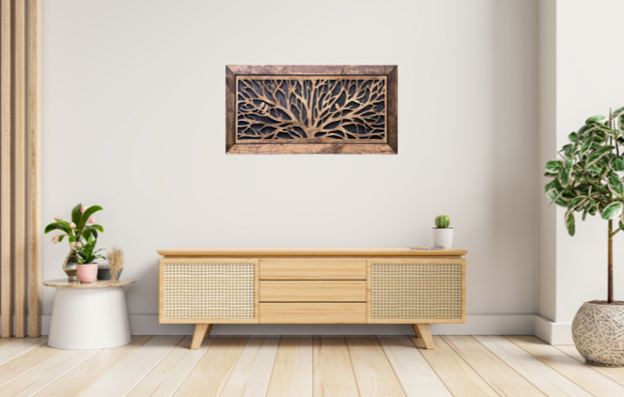
Bellewood Designs product line, such as their Hidden Gun Storage Picture Frames and American Flag Gun Cabinets, functions as “Invisible Safes.”
Continuing the tradition of meticulous craftsmanship, each piece is handcrafted in the USA from premium woods. These are designed to stay flush to the wall with a low-profile 4-inch depth. Inside, the cabinets feature customizable, pre-scored foam inserts. This allows homeowners to “pluck” out a custom fit for their specific handguns, magazines, tactical flashlights, or even passports and jewelry. It is a tailored security solution that looks like a high-end gallery piece.
3. Strategic Placement
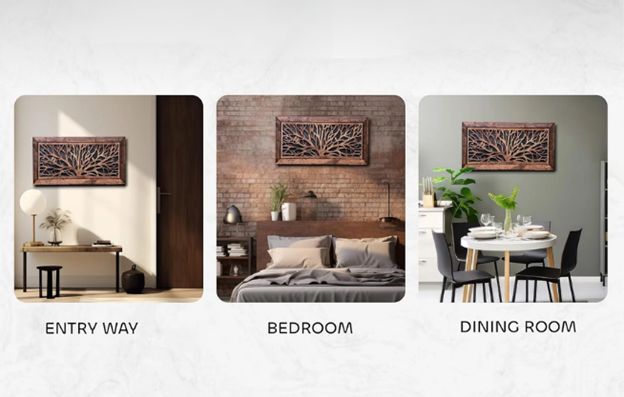
Because Bellewood Designs products are decorative, they can be placed in high-traffic areas where a traditional safe would be impractical. Whether it is a pre-designed ‘Birds in a Tree’ cabinet in a hallway or a personalized family theme gun cabinet in an entryway provides “Rapid Access” right where it is needed most. This mirrors the OSS strategy of placing gear “at the point of use,” disguised by the environment.
4. Ready-Made Excellence vs. Bespoke Customization
Bellewood Designs offers the ultimate flexibility for the security-conscious homeowner, providing two distinct paths to protection:
Curated Designs: For those who want immediate security, Bellewood Designs offers a wide variety of pre-designed hidden gun cabinets. These feature professionally vetted handcrafted artwork, including rustic wildlife scenes, spiritual verses, and iconic patriotic imagery. These pieces are “ready-to-go,” allowing you to implement a concealment strategy in your home without the wait.
The “Custom Too” Approach: For homeowners who want their security to be as unique as their family history, Bellewood Designs offers fully customizable gun cabinets & safes. Much like the commissioned furniture of the 18th century, you can add family names, business logos, or specific established dates to your cabinet. This level of customization provides the ultimate camouflage; an intruder sees a sentimental piece of family history, never suspecting it is a secure wall safe.
Conclusion: Lessons from the Past
The history of secret furniture teaches us that the best security is often the most subtle. From the intricate mechanical wonders of the 1700s to the life-saving concealment devices of the OSS, the goal has always been to stay one step ahead of the observer’s expectations.
For the modern homeowner, adopting these principles doesn’t require a background in intelligence. It simply requires a shift in perspective: realizing that a beautiful home and a secure home can be the exact same thing. In an age of high-tech surveillance and heavy steel, sometimes the most effective way to protect your world is simply to hide it in plain sight.
Secure Your Home Your Way
Whether you are looking for a professionally designed, ready-to-ship hidden gun cabinet or want to create a one-of-a-kind custom design gun cabinet, Bellewood Designs has the solution.
Because the best defense is the one they never see coming.